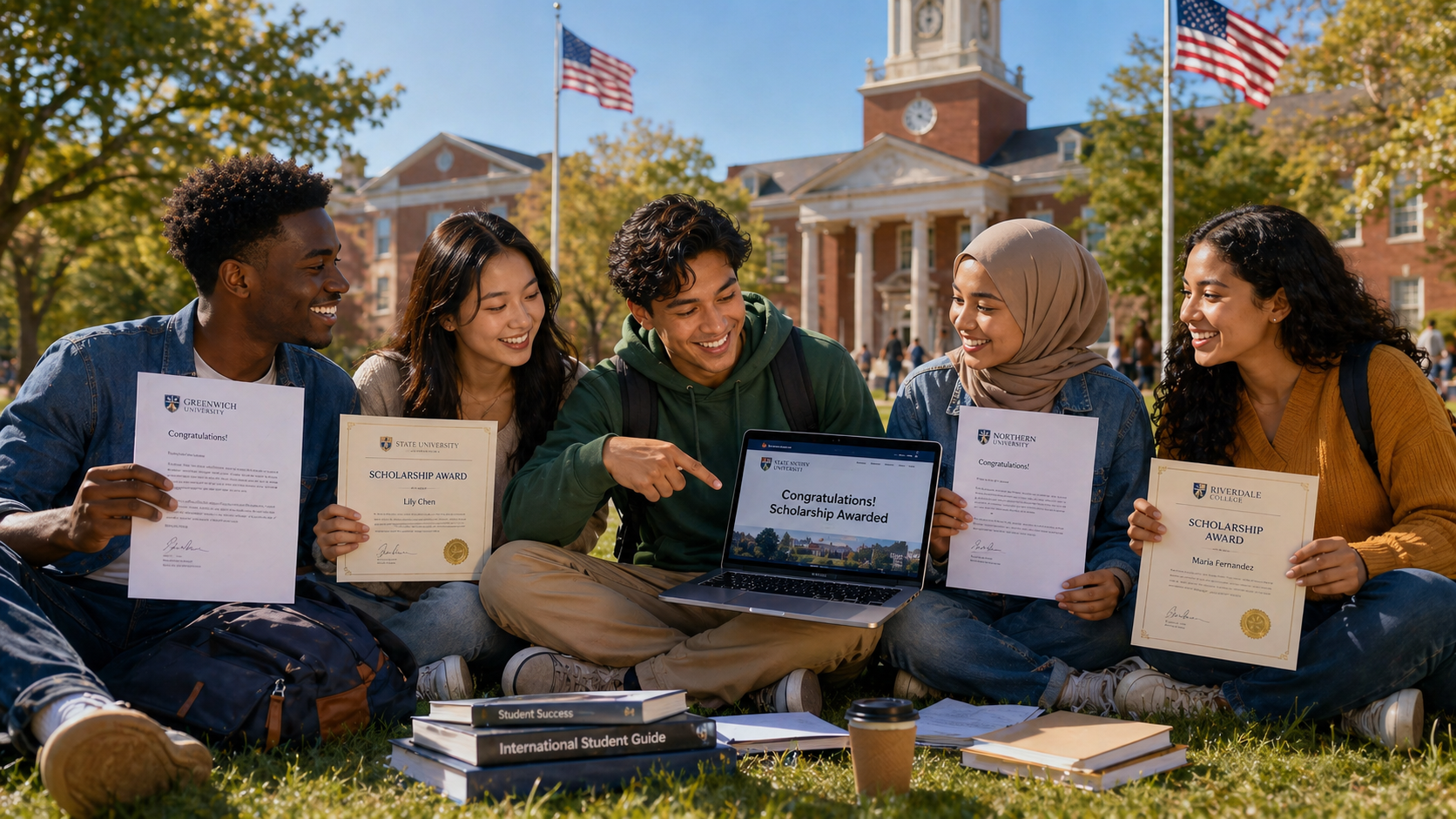
An international scholarship offers you a financial award, as a student who is not a citizen or permanent resident of the country where you wish to study, the opportunity to study for free, or partially funded. Unlike loans, scholarship funds do not need to be repaid.
Unlocking the door to a U.S. degree might be cheaper than you think. In the next five minutes, you will have a complete roadmap to securing undergraduate scholarships for foreign students.
The benefits of studying in the U.S cannot be overemphasized. Imagine earning your bachelor’s degree in New York, California, or Texas without worrying about tuition bills. Or do you still think this is impossible for you? You’re not alone, and I can confidently assure you that study in the US for free.
For millions of students worldwide, the dream of studying abroad often crashes into the reality of the high costs of education, which they can not otherwise afford. But what they don’t know is that you can turn that “impossible” into an acceptance letter.
Every year, billions of dollars in international scholarships go unclaimed by interested, qualified students, not because they aren’t fit, but because they don’t know where to look. Whether you are in Nairobi, Mumbai, Nigeria, or Sao Paulo, scholarships for international students are more accessible than ever; all you have to know is the secrets of the application process.
This article is a strategic playbook designed for potential US scholars like you. Through this comprehensive guide, you will find out the exact steps to take to apply for and win USA scholarships for foreign students. From prestigious, fully funded programs to hidden university grants, you will learn how to finance your American education as an undergraduate.
Let’s turn your global ambitions into reality.
What Are International Scholarships, and Why Do You Need Them?
Before exploring the list of opportunities that are available, we need to be sure that we are on the same page about what we are talking about. An international scholarship is a financial award given to a student who is not a citizen or permanent resident of the country where they wish to study. Unlike loans, these funds do not need to be repaid, and most of them can be renewed if you meet the required academic threshold.
For students targeting the United States, these awards fall into three main categories:
- Merit-based: Awarded for academic achievement, leadership, or artistic talent.
- Need-based: Awarded based on your family’s financial situation.
- Country-specific: Designed for students from particular regions such as Africa, Asia, or Latin America.
Here is the truth: U.S. universities desperately want international students just as much as you need them. Diversity on campus is a priority, and to attract the best minds globally, schools offer scholarships abroad for international students’ programs that cover partial to full expenses. However, most foreign students give up before they even start because the system looks like an impossible mission.
By the end of this article, you will move from confusion to clarity. You will understand exactly where to look, how to build a winning application, and avoid the mistakes that get 90% of applicants rejected. This isn’t just information; it is a roadmap to changing your financial future.
What You Need to Know Before Applying
To succeed in securing USA scholarships for foreign students, you must understand the language of financial aid. Let’s clarify the three critical concepts about types of scholarship abroad for international students.
The Three Main Types of International Scholarships
Not all financial aid is created equal. When searching for international scholarships, you will encounter three distinct categories, and knowing which type fits your profile will save you months of wasted applications.
1. Merit-based Scholarships: Awarded for academic achievement, leadership, or artistic talent
These are the most competitive but also the most common scholarships for foreign students. Universities offer them to attract the brightest students regardless of their financial needs. So, if you have a strong GPA, have won national debate competitions, or possess rare gifts, you are a strong candidate for merit-based scholarships.
Even if your family has the resources to sponsor your education abroad, apply for merit awards because your financial status does not matter in this category.
2. Need-based Scholarships: Awarded based on your family’s financial situation
These types of scholarships for foreign students focus more on your ability to pay. Therefore, the lower your family’s income, the more aid you receive. Universities in the U.S use forms like the CSS Profile to calculate exactly how much aid you need.
If your family earns less than $30,000 annually, need-based awards are your best path to explore. However, you must be strategic in the process to improve your chances.
3. Country-specific Scholarships: Designed for students from particular regions
Many international scholarships target specific regions to promote geographic diversity. For example, the Aga Khan Foundation focuses on students from parts of Africa, Asia, and the Middle East. The University of Oregon International Stipend prioritizes applicants from Latin America and Southeast Asia. Insider advice: Country-specific scholarships have smaller applicant pools. If you are from Ghana, Vietnam, or Peru, search for “scholarships for [your country] students in the USA.” Your odds increase dramatically.
How to Apply for International Scholarships
You have the list of international scholarships. You have the documents. Now, how do you actually apply? Following a disorganized process is the fastest way to miss deadlines and lose opportunities. Use this exact sequence to stay organized, reduce stress, and submit winning applications.
Step 1: Create a Master Spreadsheet
Before you write a single word, build your tracking system. Open Google Sheets or Microsoft Excel. For each international scholarship on your list, track the deadline, required documents, award amount, application status, and the official portal link.
Color-code your spreadsheet. Use red for deadlines in less than two weeks, yellow for deadlines in two to four weeks, and green for applications you have already submitted.
Step 2: Register for Standardized Tests Early
TOEFL, IELTS, Duolingo, SAT, and ACT are not instant. You must register, take the test, wait for scores, and send them to universities. This entire process takes four to eight weeks.
If your first scholarship deadline is February 1, register for your tests by September or October. Do not wait until December. Many undergraduate scholarships for foreign students require test scores for merit consideration, and late scores will disqualify you.
Step 3: Write Your “Core” Essay
You do not need to write ten different essays. Write one strong 650-word personal statement about a specific challenge you overcame. Then, adapt it for each scholarship.
Choose one specific story. Do not summarize your life or list your achievements. Tell a 650-word story about a problem you faced, what you did to solve it, what you learned, and how this experience prepares you for studying in the United States.
Do not copy and paste the same essay without changes. Scholarship committees read thousands of essays and can spot a generic, recycled submission immediately.
Step 4: Request Recommendation Letters Early
Teachers are busy. Asking for a letter one week before the deadline is rude and will result in a weak, generic letter. Ask at least four weeks in advance.
Send a polite email to two or three teachers who know you well. Tell them which scholarships for foreign students you are applying for. Remind them which class you took with them and what you enjoyed about it. Attach your resume or personal statement so they have something specific to write about. Give them the deadline clearly.
Step 5: Submit the University Application First
Most USA scholarships for foreign students are attached to university admission. You cannot win the scholarship if you are not admitted to the university. Therefore, submit your Common App or university application at least two weeks before the scholarship deadline.
Some scholarship deadlines are for the university application, not a separate form. If you wait until the last day to submit your application, technical problems could ruin your chance. Submit early, then focus on any separate scholarship materials.
Step 6: Complete the CSS Profile for Need-Based Aid
If the scholarship or university asks for the College Scholarship Service (CSS) Profile, fill it out immediately. This is the global standard for calculating financial need for scholarships for foreign students.
The CSS Profile asks detailed questions about your family’s income, assets, expenses, and special circumstances. It takes two to three hours to complete. Do not rush through it. Answer every question honestly. If you lie, universities will find out when they request verification documents like tax returns or bank statements.
The CSS Profile costs money to submit to each university, but fee waivers are available for low-income international students. Check each university’s financial aid website for fee waiver instructions.
Step 7: Track and Follow Up
Three weeks after submitting your application, send a polite email to the financial aid office or scholarship committee. Do not ask “Did I win?” That is annoying. Instead, ask for confirmation that your file is complete.
Sample email: “Dear Office of Financial Aid, My name is [Your Name]. I submitted my application for the [Scholarship Name] on [Date]. Could you please confirm that my file is complete and that no documents are missing? Thank you for your time.”
This simple email has saved many students from missing deadlines because a teacher forgot to upload a recommendation or a test score never arrived.
Frequently Asked Questions
Can I get a 100% full scholarship to the USA as an international student?
Yes. Top universities like Harvard, Yale, MIT, and Berea College offer full-ride international scholarships covering tuition, room, and board. However, they are highly competitive. Apply to at least 10 schools to increase your odds.
Do I need to take the SAT for undergraduate scholarships for foreign students?
Many schools have become test-optional. However, for merit-based USA scholarships for foreign students, a high SAT score (1450+) distinguishes you. Take it if you can afford it; submit the score if it is above the 90th percentile.
What is the easiest scholarship for international students to get?
“Easiest” is relative, but the Berea College No-Tuition Promise has a higher acceptance rate than the Ivy Leagues. Also, look for new or regional awards (e.g., “The Ghanaian STEM Student Award”) that have smaller applicant pools.
Can I apply for scholarships after I start studying in the USA?
Yes. Many scholarships abroad for international students are for current students. Once enrolled, check your university’s “Continuing Student Scholarship” portal in your sophomore year.
How do I write a scholarship essay if English isn’t my first language?
Be authentic. Do not use big words you don’t know. Write simply. Then use grammar tools like Grammarly or ask a native English speaker to review “flow” only (not to rewrite your voice).
Don’t Miss These Opportunities
The path to studying in the United States is not easy, but it is simpler than you think. There are thousands of international scholarships waiting for students exactly like you—driven, curious, and willing to work for their dreams.
You now have the clear roadmap, the list of top USA scholarships for foreign students, and you already know the essays to write. You are equipped with the necessary information to apply like a pro
Now, the ball is in your court.
Don’t let fear of rejection stop you. Start today. Open a new spreadsheet. Write the first sentence of your personal statement. Email one teacher for a recommendation.
Your future American classroom is waiting. Start applying now—one application at a time.
Have a specific question about a scholarship on this list? Drop a comment below. Our team of international student advisors responds within 48 hours